



Discussion Groups
Our discussion groups were intimate, curated conversations led by some of the biggest names in AI. Attendees were assigned to a group based on the topics they were interested in for a collaborative conversation with other AI leaders.
Each group dove deep into a specific topic, giving attendees the chance to engage directly with the discussion leader and fellow participants in a small-group setting.
Discussion Group Topics
Attendees were assigned to one of the following groups based on their interest and expertise.

Peter Hazlehurst
Founder & CEO
Synctera
The Waymo Moment for Money: Would You Let Your Wallet Drive Itself?
Self-driving cars reached a point where people trust the machine driving more than the human next to them. Peter Hazlehurst, Founder & CEO of Synctera, will explore whether money is next: as AI agents start executing financial decisions instead of just assisting with them, what would it take for people, businesses, and regulators to actually hand over that trust?

Erica Dorfman
CFO
Brex
Giving AI Agents a Corporate Card: What Controls Would You Actually Trust?
The idea of agents buying things on a company's behalf is moving from theory to reality fast. What's still unresolved is what happens when one gets it wrong: who approved the limit it was operating under? And can anyone reconstruct what happened after the fact? Erica Dorfman, CFO of Brex, will lead a conversation on what it would actually take to trust an agent with something like a corporate card?

Kahlil Lalji
Founder & CEO
Natural
Agent Identity: Verifiable, Legally Understood Identity of Agent Actors
How do we identify and verify agents as they increasingly act on behalf of people and businesses? What does trusted delegation look like across systems, how should compliance obligations attach to agent activity, and who is ultimately responsible when an agent takes an action?

Darragh Buckley
Founder & CEO
Increase
Do AI Agents Actually Need Crypto?
We'll unpack the growing assumption that crypto and stablecoins will become the natural payment rails for AI agents. Darragh will discuss what agents need from financial infrastructure, where existing card and banking rails already work, and where they may fall short.

Mackenzie Burnett
Founder & CEO
Ambrook
Finding PMF for Agents
How can companies build effective interfaces and monetization frameworks for agents? Many companies are launching in-product agents or AI assistants, but user adoption varies. Interface, design, pricing, and even agent personalities can make a big difference in finding product-market fit, especially depending on the end customer—enterprise, prosumer/SMB, or consumer.

Lalitha Rao
Chief Risk Officer
Imprint
Model Behavior: Building AI-first Companies in Regulated Industries
The pace of AI development isn't slowing down and an AI-first company will be changing models, developing new products, and building at speed in a way the regulatory system wasn't always built to handle. Meanwhile, discussions on AI regulation are only increasing at all layers of government. And some industries—like finance—are even more sensitive to customer safety and reliability. The stakes are high. We'll discuss how companies are using AI to continue to unlock growth in the world of finance and other regulated spaces while continuing to focus on safe, compliant development.

Aditi Maliwal
General Partner
Upfront

Nico Simko
Founder & CEO
Clair
Money Moves at the Speed of Access: The Data Layer Beneath Agentic Finance
Everyone wants agents that can move money, but few are building the systems that enable the access they need to send money easily, reliably, and safely. Before an agent can decide when someone gets paid, what they can afford, or which account to draw from, it needs high-fidelity, permissioned access to sensitive data like employment, income, and past transactions, as well as a clear record of who authorized it. How can you provide your agents the the data they need and keep track of everything in the process? This discussion looks at what agentic finance actually requires underneath the model: where the data comes from, who owns the consent, and why distribution and data may matter more than the agent itself.

Frank Rotman
Founding Partner
37Maru
Why Frontier Labs Will Struggle to Crack Personal Finance
The most recent AI models are proving to be amazing general answer machines, but how good are they at answering personal finance questions and how money shapes people's lives? Can they become destinations that people trust? Will they build the skills to act or will they only advise? Frontier labs have powerful models, but moving from generic advice into the highly regulated and complex space of consumer finance won't be easy. Where do large incumbents and scrappy startups have an edge, and where could the labs win?

Anu Maheshwari
Head of Venture Ecosystem
Nebius
Open Weights, Better Margins: Why Fin Serv and Commerce Are Rethinking the Frontier-Model Default
As agentic products move from pilot to production, the cost of running them on proprietary frontier models starts to bite — and teams are re-evaluating for margin, control, and governance, not just capability. This discussion explores when and why that switch makes sense, and what founders and investors should actually weigh before making it.

Croom Beatty
Partner
Menlo Ventures
The AI Finance Stack: Accounting, Reporting, and Planning
Keeping track of your money, whether it's corporate accounting or personal wealth, makes for a complex workflow with complex data. Different sources, standards and processes make this a highly specialized and technical task. But that's exactly the type of task that AI can supercharge. In this session, we'll look at the ways that modern AI tools are starting to change the way people approach finance, what's yet to be built, and what customers are hoping to see next.
Examples From Past Summits
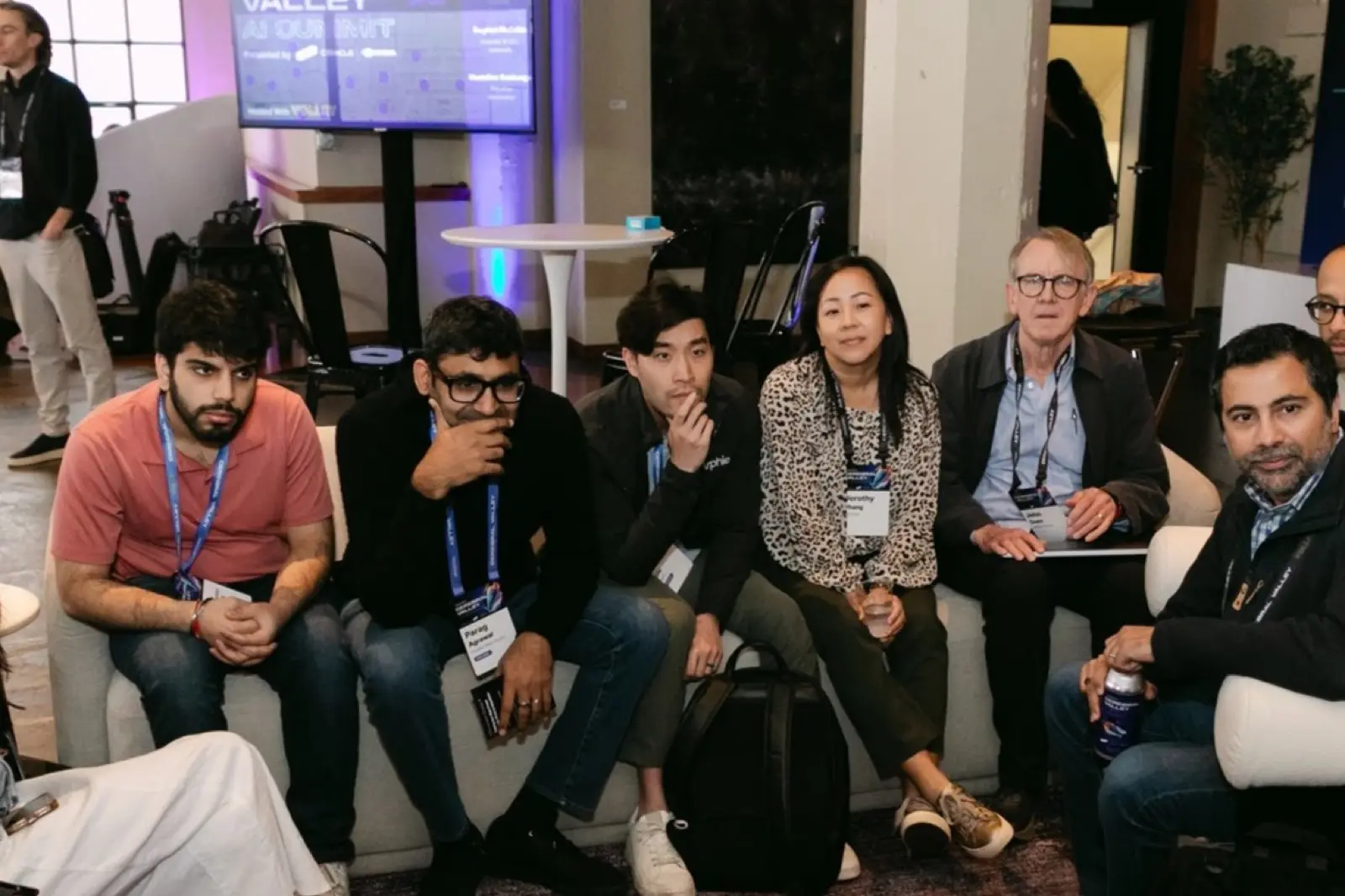
Parag Agrawal
Founder & CEO, Parallel Web Systems
Taking the Web From Human-First to Machine-First
The fabric of the internet is changing as we progress towards agents becoming the primary users of the web. It might not be too far from now that more traffic is agentic than user-driven. How will those agents interact with products, sites, and services?

Julie Bornstein & Kirsten Green
Founder & CEO, Daydream + Founder & Managing Partner, Forerunner Ventures
LLMs Open the Door — Expertise Builds the House
As the first wave of consumer AI applications emerged, many assumed that building a “wrapper” on top of large language models would be simple. The reality is far more complex — and far more interesting. True differentiation comes from being excellent at the edge, where deep domain expertise and nuance meet AI advancements to honor a vertical’s cultural, regulatory, and highly subjective intricacies. This discussion will explore what it takes to translate LLM potential into real consumer value at the application layer.

Emil Eifrem
Founder & CEO, Neo4j
The Persistent Memory Layer: Do Agents Need a Brain, Beyond Just a Model?
The next generation of agents won’t just complete tasks - they’ll remember, adapt, and improve over time. Persistent memory is key to making it happen, and it’s fast becoming a new battleground for product defensibility and differentiation. But what does durable memory look like in practice? How do we architect memory that scales with users, respects privacy, and compounds value? The session explores the question of agentic memory: when it’s needed, what founders needed to build lasting agent intelligence, and what VCs should look for when investing in it.